Monday, March 22, 2010

Digital Convergence


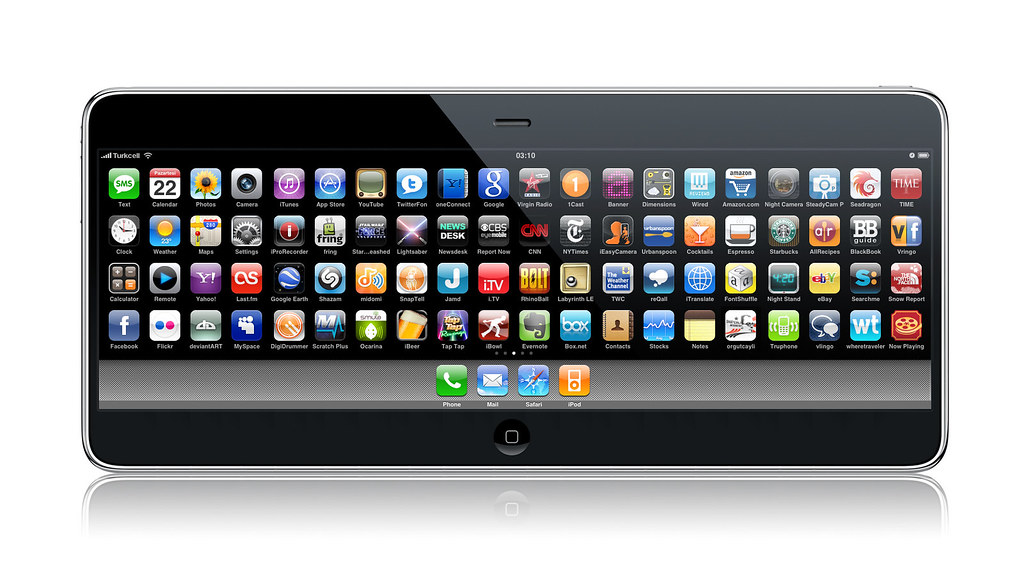
Digital Convergence is exactly what it sounds like. It is the converging, or coming together, of several digital devices or services. In the world of technology, we have come so far. Just throughout my lifetime, I have gone from lugging several cumbersome devices with me when I travel to now only having one or two very small and compact devices that fit into my palm. It amazes me that Apple is coming out with an even more high tech, sleek device that carries everything to keep you entertained for days. Apple’s iPad is not the only device to converge all types of media. Computers, tablets and laptops now have webcams and speakers to talk live to other individuals that could be halfway across the world. Amazon’s Kindle allows consumers easy access to books at their fingertips. PDA phones work like computers, giving consumers the chance to jot down grocery lists using Microsoft Word on their phone. Smart phones, along with PDAs have access to internet where individuals can check email and watch videos. It’s a long tail; the places we can go with media and digital information is endless.

When you think about it, the merging together of technology has to come from the monopolization in big corporations. For instance, AT&T offers telephone service, cable/interactive television programming, and wireless phone service. Through their wireless service, AT&T has tag teamed with a leading company, Apple, offering a cell phone that has the ability to store and play music and videos, like an Mp3 player, and surf the internet, like a laptop or computer.

Consumers love these new devices. Many are easily amazed by the appearance while others gain an electronic high from the specs. Even in this recession, the demand and sales of fancy digital converging devices seem to grow. Corporations remain on top because everywhere consumers go; they are constantly feeding us with more “stuff.” Free applications on these devices are made for sharing. In my opinion, it shows the human side of a world full of electronics. These non profit creators find pleasure in sharing things they find useful at no direct price to others. I just love how the internet allows people to share their creativity with the world. This democracy given to individuals will only help create an even more creative, innovative and longer tail.

In 10 years, I expect many upgrades to the same devices available now. The devices will just be much smaller and transportable than they already have become. Ten years ago, I never thought I would have a cell phone that allowed me to watch videos, television, movies, read books, listen to music, play games, calculate my tip for the waiter, type homework, read email and surf the web at the same time. In ten years, the technology that will be in will be whatever is small and fast. Larger devices will not need much use and since handheld devices are becoming so readily available, they will be able to do anything you need them at a rate quicker than thoughts. It is hard to keep kids paying attention in class now so I can only imagine the difficulty when devices are so small and discreet, like they will be in the future.

Sites Used:

Create Debate

http://search.creativecommons.org/#

Photo

http://designyoutrust.com/2009/04/28/apple-iphone-4g-2/

Wednesday, March 10, 2010

Assignment 4: Facebook and Twitter

Today, we are living in a world where you are thought to be crazy if you are unaware of Twitter and Facebook.

Google Buzz is just another site used where people learn about individuals whom they are linked to. I, personally, have not used Google Buzz yet. I am still pretty busy with Facebook and Twitter. My favorite, currently, is Twitter. It could be because I have not gotten sick of it yet, but I love it.

Facebook is a site that was once exclusively for college students, but now everyone is involved. It is a site where you can share comments, pictures, personal information and views with “friends.” I knew it was epic when I received a friend request from my 50-year-old uncle. I was shocked, not knowing whether to be excited or disturbed. It’s cool that all ages can connect with people all over that they have lost contact with over the years and transition of locations, perhaps. However, this wide range of “faces” can potentially be troublesome. Everyone doesn’t want their parents to see their wild pictures from a Cancun trip. To alleviate the problem, Facebook has come up with privacy settings that limit certain people from viewing certain aspects of your profile. It’s a good idea but a forgetful memory can have an effect. It takes work to know who can see what. Then, people talk, so you dare not let an individual know they are the only one blocked. It takes skill to limit your profile without hurting feelings. As the years of being a nosey “Facebook Stalker” (you know you are guilty, too) became not so exciting. I found my new love… Twitter!

I began only using Facebook to update my status, which would mention something about my emotions for the day, my whereabouts, random thoughts, etc. Soon after I began to draw away from Facebook, there was much talk about Twitter. This site was just what I needed since it is basically allows status updates. You can also share pictures. You can tag people who you are talking to or about. Twitter even allows you to tag the long list of celebrities who you “follow.” So let’s say I tag Taylor Swift in my comment, she can view who all mention her name and she may come across my comment. If she likes it she can reply, so it’s like we are talking to each other, which is pretty cool. It doesn’t get me tickets to her upcoming concert; but, I’ll take it.

People want privacy on the web these days so Twitter allows your “tweets” to be protected. This basically means that the people who are allowed to view your page must be your followers. Of course there is a loophole. If someone who is following you replies to one of your tweets, sometimes it has your tweet on that friend’s page. It may be easier understood with an example. There is this girl I heavily dislike, who I’ll name Fox. (that’s what she looks like) Well “Fox” and I are both followers of a good friend Dave. He follows us, too. My tweets are protected so Fox is unable to see them, but when Dave replies to my tweet, it has my tweet and his reply on his page. So Fox can see what I said. This is so horrible because I don’t want my tweets shown to anyone I am not fond of.

Now Google Buzz, I don’t use. I am fine with my Twitter. Since, I am not very knowledgeable about it; I went to the site and watched a video on it. Basically, you need a Google mail account (which I do not have) in order to be connected. It allows you the same services as Twitter but it links you with the email addresses you have stored. This wouldn’t work for me either because I barely email to my friends these days.

I find it interesting how several news organizations and corporations are taking advantage of these sites. On commercials and various company sites, they have a small link at the bottom with Facebook and Twitter logos, to show they are on such sites.

It shows how they refuse to take the backseat to these media outlets. People are on Twitter and Facebook these days, getting information so corporations and organizations have created profiles where people will see their upcoming events or important facts. They use these sites to find out information about present and future employees as well. Sometimes it is even a determining factor of who will be hired, so it’s important NOT to display your dirty laundry on the internet. Businesses have also used sites like Facebook for publicity. Since so many people wastes large portions of time on the sites, businesses use this as a way to get themselves out there and into the mouth of the people. They receive feedback and sometimes find ways to make company improvements. It can also be used to find new customers and build online communities of fans. Businesses can see themselves from the eyes of the customer.

Facebook offers Facebook Pages to businesses where they can collect a number of “fans.” Many musicians and celebrities do it as well. Starbucks, for instance, have over 7 million fans. They direct us to their website and include a mission statement and company overview. There is a link to get started on your Starbucks card where you can review what is on it.

Starbucks Facebook page allows for discussions and several videos and photos. They even include any current specials or events. I am sure Starbucks has received much success and far greater business.

My favorite place to go is Chipotle Mexican Grill. Unsurprisingly, they have a Facebook page where they even allow a game to be played. Just looking at that page has made me want to go eat there. What I like most is that they have one of their own representatives there to comment back to topics and discussions people have posted. They have gained my vote.

Through the internet businesses have a “long tail” when it comes to options for increasing the business name. People get to share new ideas with them that they may not have considered. The internet does not only help businesses but it allows individuals to share their thoughts with the world.

Photos Used:

1,2,3,4,5,6,7,8,9,10

Sites Used:

1,2,3,4


Saturday, February 13, 2010

CReATive CoMMons

Creative Commons is licensing that makes it possible to share creations online for free. There are six free licenses that legalize the sharing of text, audio, video, art, photos, and music online.


List of Licenses

The question may arise whether Creative Commons takes away the Copyright of an individual or organization but it doesn’t. A person still is licensed under his or her Copyright; however, Creative Commons allows exceptions. Others are allowed to get your permission to use your work. Creative Commons opens the window to sharing your work worldwide via the web.

Josh Woodward is an individual who is using a license under Creative Commons to share his work with whoever is interested in using it. The only catch is that they must attribute their work back to Josh. This is a way to get Josh Woodward’s name and creative works out for others to tweak, remix, use, download or enhance.


The idea of Creative Commons is amazing in my opinion. I think sharing is caring, so I am all for anything that legally allows individuals to share online, for free. I think it’s beneficial to all parties because the one using someone else’s art has more availability and choice of artwork to use while the creator of the work gets their name spread. The one who created the work usually doesn’t mind, anyway, if others use their work, but use of creative commons licensing allows internet sharing to become legal for everyone involved.

Check out this Link!

http://creativecommons.org/videos/wanna-work-together


Sources Used:

Creative Commons

http://creativecommons.org/about/licenses/

Article in Hypergene Media Blog

http://www.hypergene.net/blog/weblog.php?id=P223

Article in The Huffington Post

http://www.huffingtonpost.com/esther-wojcicki/creative-commons-in-2009_b_366548.html

Article from The New York Times

http://www.nytimes.com/2009/05/19/books/19kaku.html?_r=1&pagewanted=2&sq=creative%20commons%20copyright&st=nyt&scp=4


Images:

Creative Commons

http://creativecommons.org/videos/

Scott Fisk

http://images.google.com/imgres?imgurl=http://scottfisk.com/wp-content/uploads/2009/06/creative-commons-license-types-pros-cons1.gif&imgrefurl=http://scottfisk.com/%3Fpage_id%3D18&usg=__MPgR68b50IJxZ_a3HDkpHE9OxpQ=&h=458&w=449&sz=19&hl=en&start=6&um=1&itbs=1&tbnid=AGxFeOm98mpfwM:&tbnh=128&tbnw=125&prev=/images%3Fq%3Dcreative%2Bcommons%26hl%3Den%26rlz%3D1C1SNNT_enUS347US347%26sa%3DN%26um%3D1


Monday, January 25, 2010

Long Tail Analysis

I enjoyed the piece by Chris Anderson although it seems a bit lengthy. He discusses this world we live in with so much technology, like the internet. It is questioned whether it is beneficial or havoc for the not only the consumer but the producer as well. The Long Tail is what he decided to call the article. I am not sure if I fully comprehend what he means when he says a “long tail” but, to me, my interpretation seems to work well. The contrast to a long tail is a short one. A short tail is just that, short, but it also is limited in what it has to offer. So the key to being successful in Anderson’s eyes is that producers need to have a long tail look at their advertising and marketing. Through the internet, much more is to be offered to a far more grand audience. Many think offering hits and hits only is the best to have more profitable sales. Although that may work in physical stores since shelf space is so limited, it only accounts for a small percentage of sales. The internet is a place to fulfill the needs of those who are interested in music, television, books, etc. that may not necessarily be hits. Through the internet, what is thought of to be unpopular and/ or “long lost” becomes found. This is because the internet produces a long tailed method of providing entertainment.
The ability of independent production and the ability to reach niche audiences change the way these media outlets operate because they allow consumers to feed their personal, individual needs that make them the way they are. Today, producers create culture that they want to be popular, so they suffocate consumers with images, sounds and various other materials to influence what consumers want. In actuality, as a consumer, I like variety. I don’t like the feeling of producers deciding what I listen to and watch on television; it seems like they are taking away my freedom of choice. For this reason, I expand my resources in other outlets, such as the internet. It funny we have this assignment because recently I have been noticing that I become so frustrated when listening to the radio. It seems like all the radio stations play all the same songs, and at the same time in many cases. I find myself popping on my iPod and connecting it to my stereo because it is agitating. I also notice that my favorite songs are the ones from CDs that had no radio play time. Various media outlets give consumers back the freedom to choose entertainment one their own and not be geared toward a particular “hit.”
Infinite shelf space can in a way be both helpful and hurtful. It is helpful in the aspect that it is much cheaper and at most times free to have information stored online. Before, we were just allowed to upload music from sites but now there are websites that allow music to be simply heard. That need to have space to store it on the computer is no longer needed. I can’t help but believe that the internet has to take away consumers in our physical world by allowing the same thing, virtually. Let’s take music for an example. If everyone is solely downloading music files online, it would become no need to have music physically in stores. This reduces sales, which reduce profit for the store. The stores may result in closing down or not needing to have so many employees. A series of bad things can occur.

sites used

http://www.wired.com/wired/archive/12.10/tail.html?pg=3&topic=tail&topic_set=

http://www.youtube.com/watch?v=0Yku0GTrcuw&feature=fvw

http://www.edibleapple.com/itunes-dominates-online-us-music-sales-chart/